
Our Story
Where the Wild Things Grow
How a family followed a quiet voice into 12 acres of forest — and found a secret growing beneath the canopy.
The Land Before Us
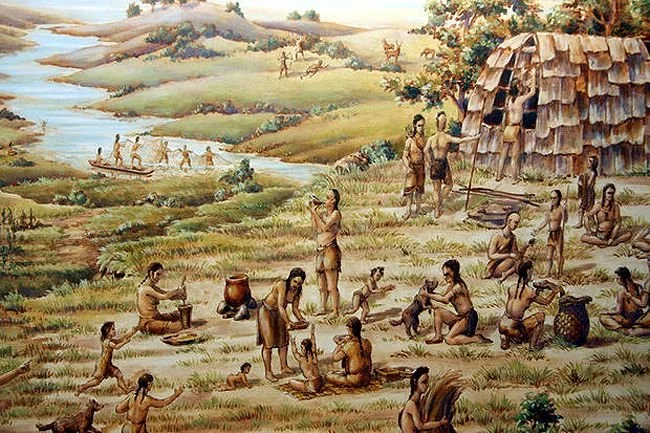
This land has stories older than we are. Long before our family arrived, the Lenape people lived on and tended these forests. They knew about the wild garlic growing here — grinding the roots into a powerful antioxidant paste for their cooking. They understood what the forest floor could provide centuries before "foraging" became a trend.
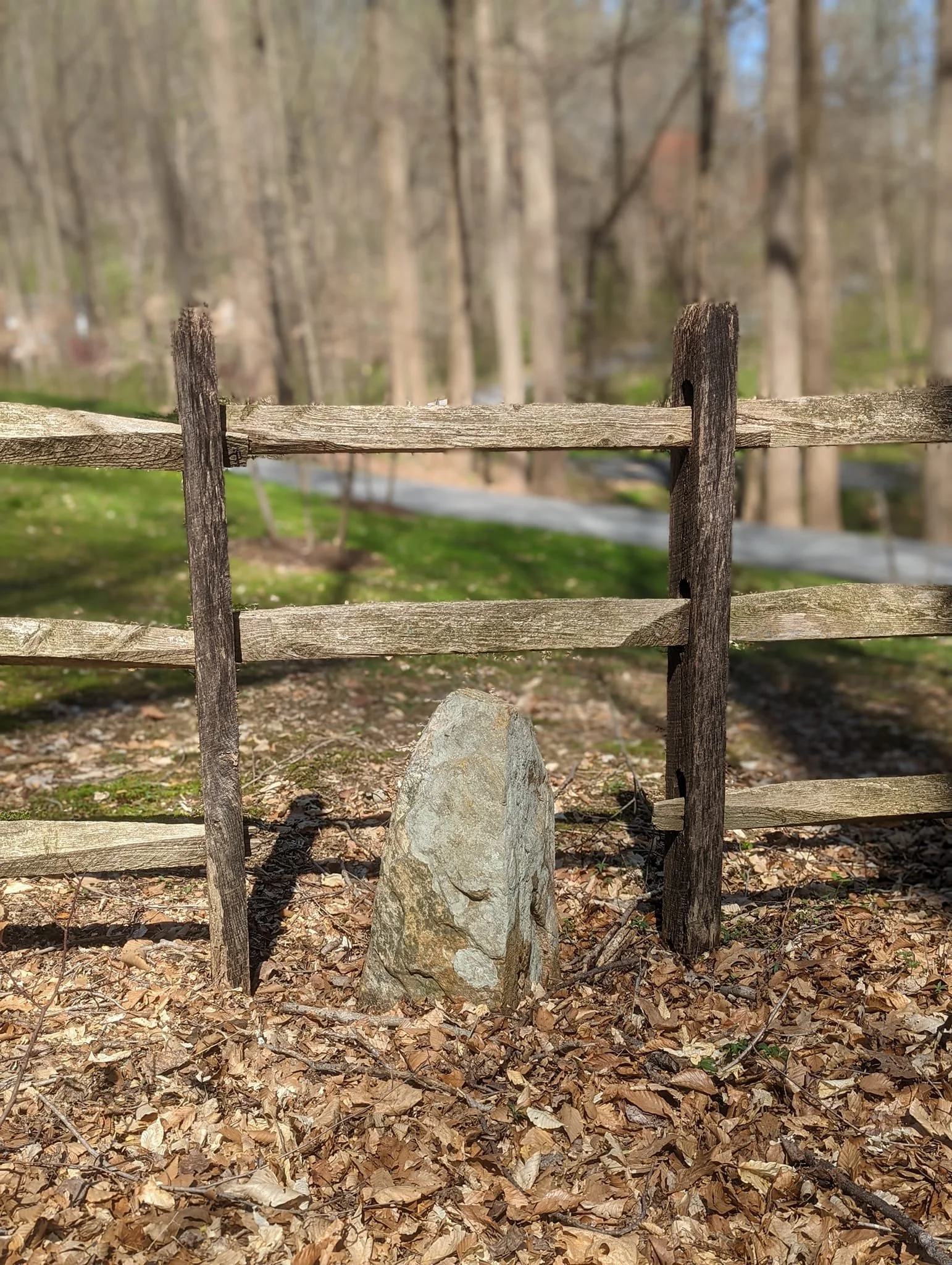
During the Revolutionary War, this ground saw skirmishes tied to the Battle of the Brandywine. Somewhere on the property stands an original stone obelisk placed by William Penn's survey team — a marker that gave the larger 180-acre farm its original name: Pennsaxum Farm. Penn's stone.
For generations after, it was farmland. Then the 180 acres were divided, and our 12-acre parcel — the forested, hilly, "unbuildable" portion — quietly grew the densest wild ramp population anyone around here had seen. It just needed someone to notice.
The Door That Opened
In 2018, we felt God open a door for us in Chadds Ford. We were praying about where to move our family, and the sense that we belonged in this community wouldn't shake — even though we couldn't afford anything here. We looked further south, further east. Nothing felt right. So I told God plainly: if we're supposed to be in Chadds Ford, He'd have to make it possible.
In short order, we were introduced to a family who had a house sitting vacant on a beautiful piece of land — 12 forested acres, outbuildings, more property than we could ever dream of affording. I told the owner honestly that it was beyond our means. She smiled and said, "Come in anyway. That's not the most important thing."
She rented the house to us well below market rate. And we moved in.
Putting Down Roots
While renting, we threw ourselves into the community. We launched a publication called Chadds Ford JunXion — a magazine filled with local stories submitted by residents, polished up, and shared with the neighborhood. It thrived. People showed up. Stories poured in.
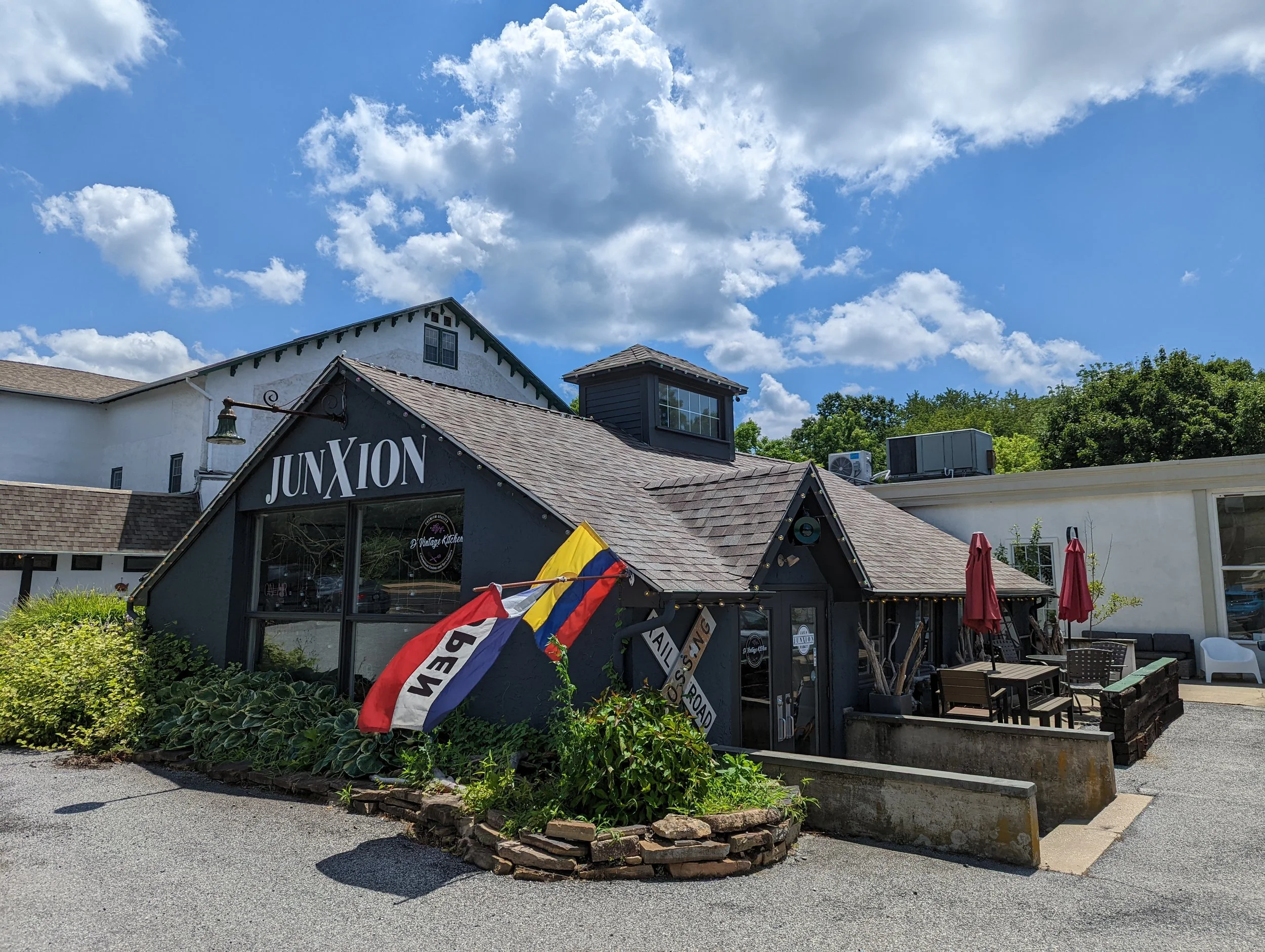
When the pandemic hit and there were no places left for people to gather, we decided to do something about it. We bought and relaunched a cafe across Route 1 from the property — JunXion Cafe. A place to meet, eat, and belong. Before buying it, we called our landlord to make sure we could keep renting the house. She said of course. They loved having us there. No plans to sell.
Three months later, the roof leaked. Then the bathroom. Expensive repairs. She had to change her mind.
"You Don't Know How I Work"
I felt sick when I got the call. But I walked into the woods and prayed, and immediately heard God say, "Buy the house." I exclaimed, "With what money?!?" And I heard Him say, "You don't know how I work."
We'd just emptied our bank accounts and savings to buy the cafe. No money for a house. Especially not a house on 12 acres in one of the most expensive areas in Chester County. No bank would touch us — two new businesses, no savings, no conventional path.
Then an older woman from the community called. She'd been praying and thought I should go see a particular farmer near Lancaster who'd become a wealth advisor. So I went. I shared our story and mentioned that while living on the property we'd discovered a rare crop of wild garlic — ramps — and that people in the community had even offered to invest in it.
He looked at me and asked, "Have you considered a farm loan?"
He connected us with the two banks in the area who do agricultural lending. Through many twists and turns, and against every reasonable odd, one bank agreed to finance our purchase — as a ramp farm. When they sent the appraiser, it was a full farm appraisal: soil testing, topography, the works. The appraiser said he'd never done anything like it. Most farms are cleared, tillable acres. Ours was a forest.
But it was our forest. And we bought it.
The Secret Under the Canopy
Since we hadn't owned the land before, we'd never pursued the ramp business. But once the deed was ours, we started to pick — sharing with close friends, selling at a roadside stand, bringing them into the cafe kitchen.
That's when we saw what ramps could do. Added to mushroom soup, they made people swoon. Chopped into a salad, people asked about the mystery ingredient. Pressed into a grilled cheese, they made it extraordinary. These weren't just wild onions — they were a culinary secret that had been growing beneath our feet the entire time.
As we dove deeper into the foraging community, we met incredible people — survivalists, chefs with traditions we'd never heard of, people who deeply appreciate what the natural world provides. We learned that the Lenape had been using these same ramp roots in their cooking long before any of us arrived. We weren't discovering something new. We were rediscovering something ancient.
Stewardship, Not Just Harvest
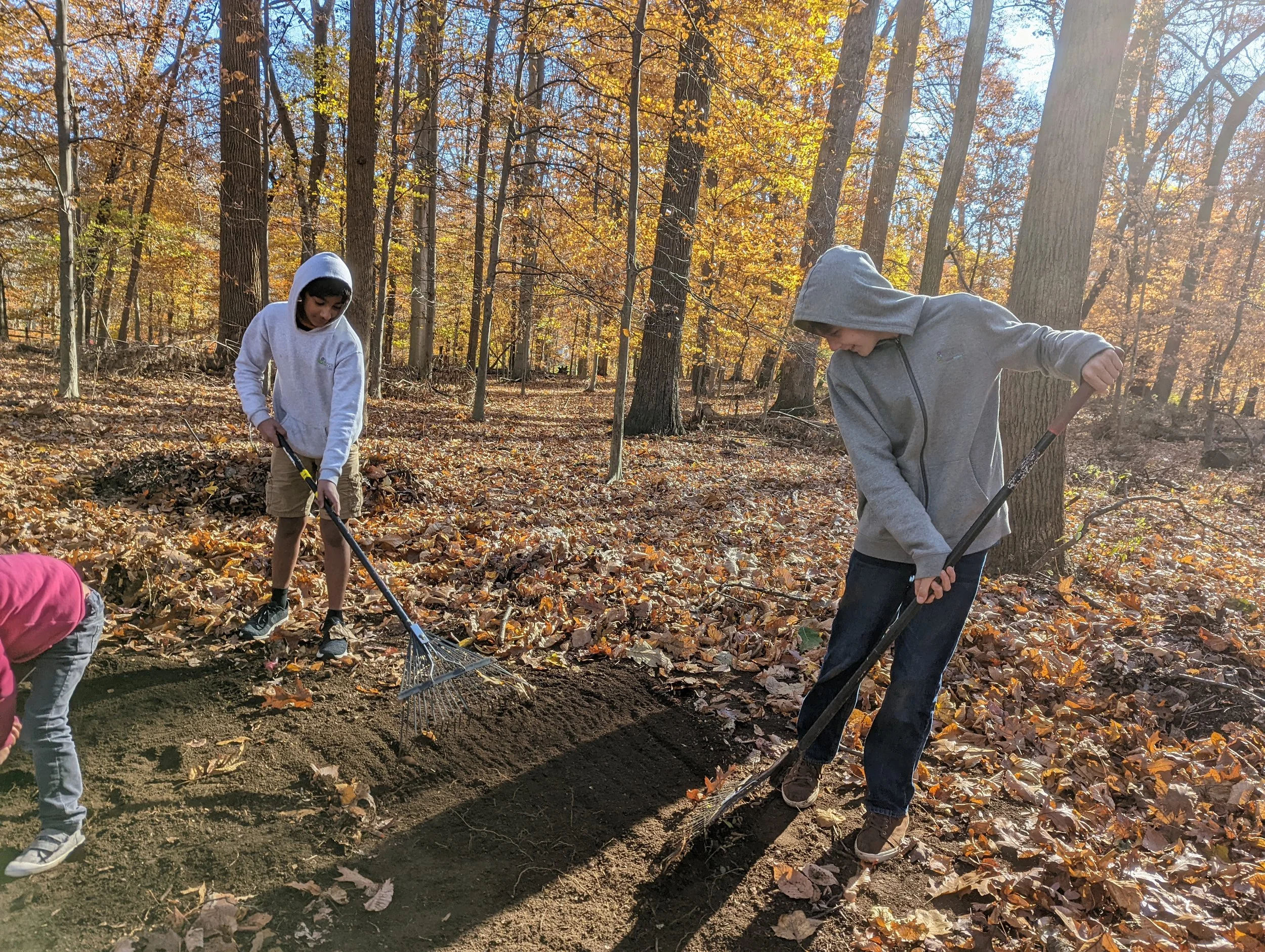
Early on, we studied carefully with experts how to preserve the patch and ensure it wouldn't just be sustained — but could actually be used as a force to multiply ramp crops far and wide. We learned how to harvest properly in a zig-zag pattern that thins without wiping out. We learned to avoid waste. We partnered with Dr. Eric Burkhart at Penn State to study whether the root plates people normally throw away could actually regrow into new plants.
Turns out they can. And now we teach everyone — customers, chefs, visitors, homeschool kids — how to plant their ramps and eat them too.
Family Powered
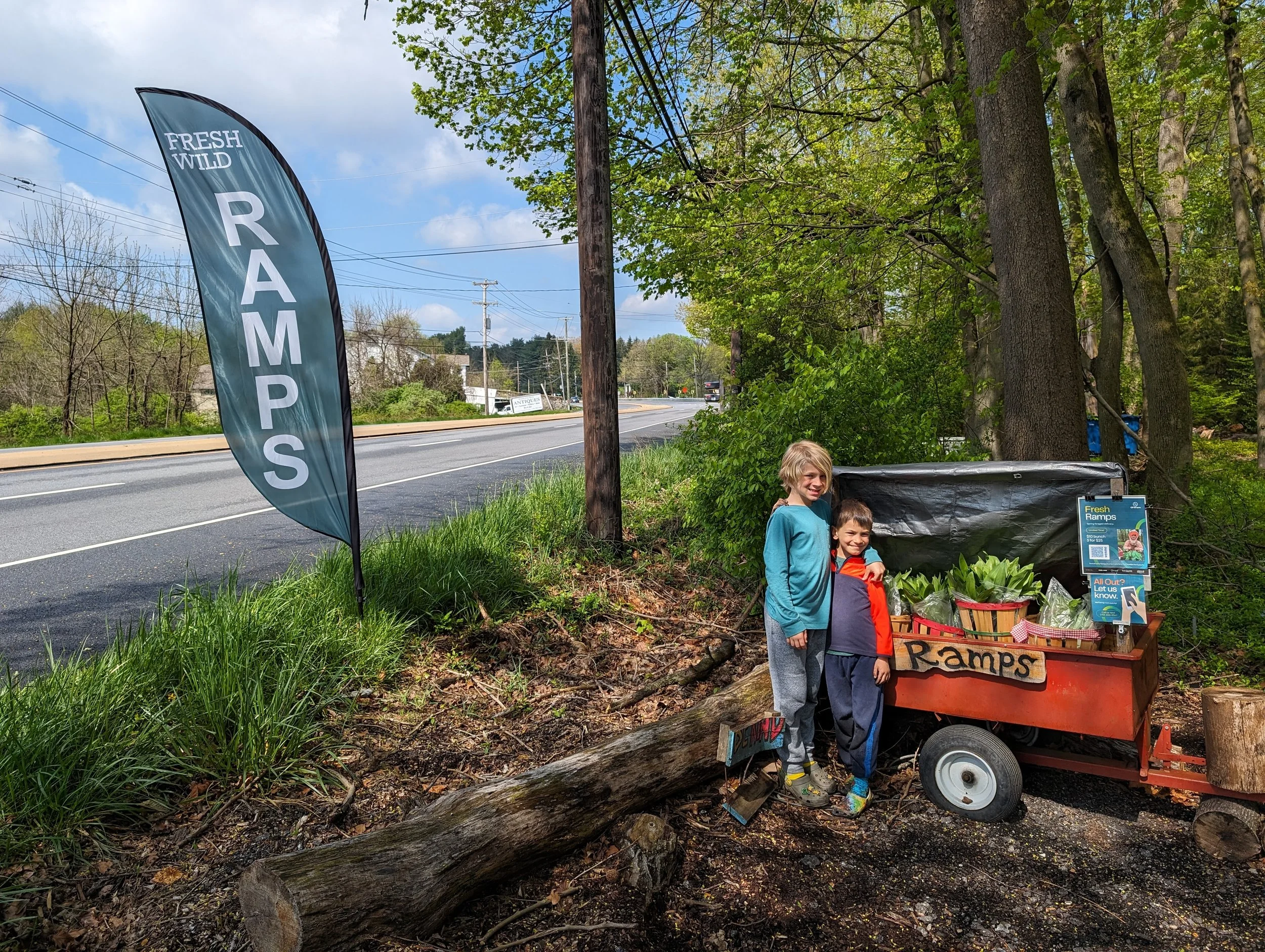
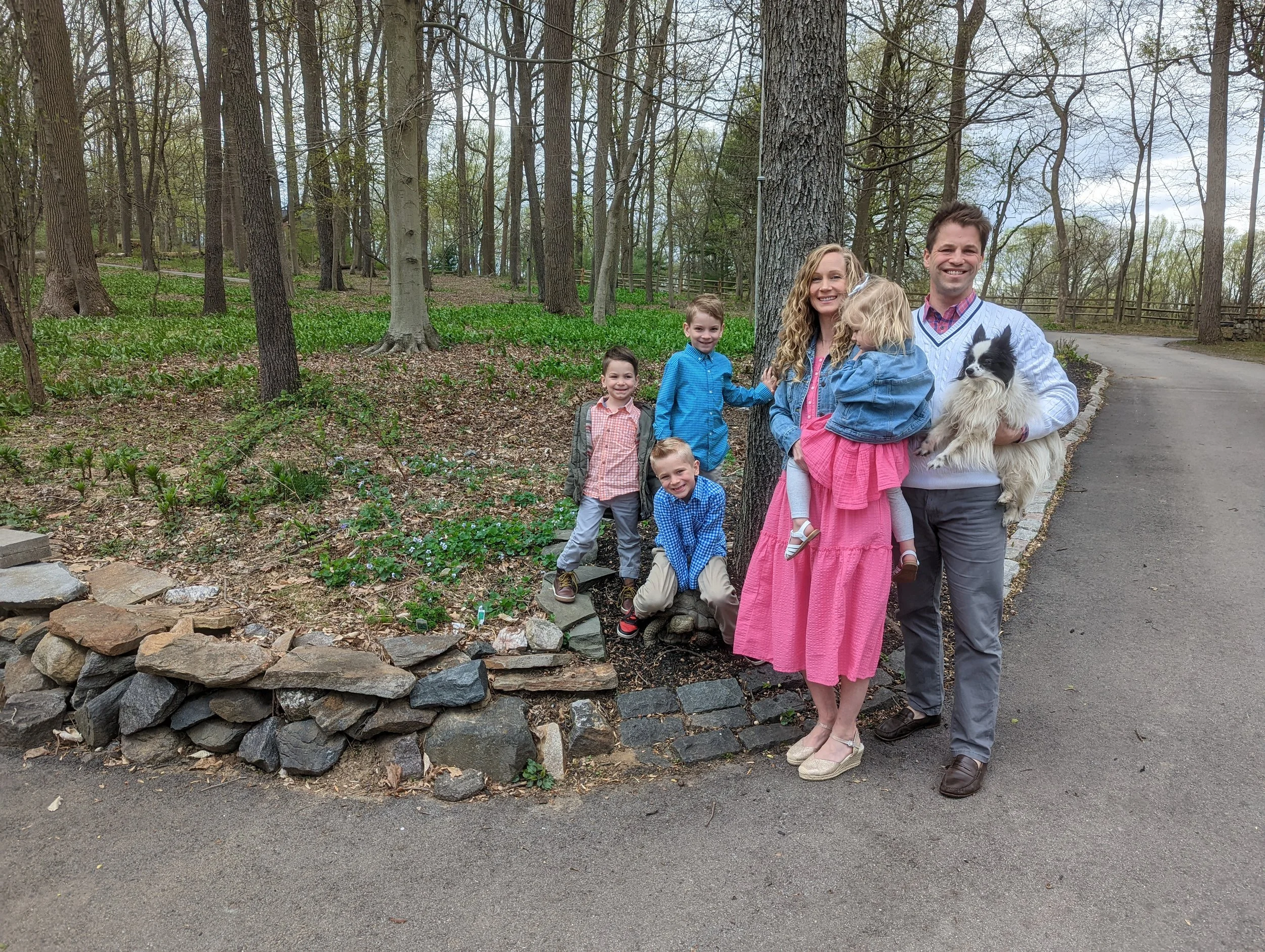
This small business has been powered, in part, by four children who sometimes have to pick ramps before school for big orders, help wash and process after school, and man the farm stand on weekends. They grumble about it roughly the same amount any kid grumbles about chores — which is to say, constantly and then with great pride when they see someone enjoy what they harvested.
We've welcomed student groups, young volunteers, and a couple years ago we started inviting people to pick their own ramps — partly because a very particular chef wanted to make sure it was done exactly right. Turns out most ramp lovers are conscientious, friendly, wonderful people. That's not a coincidence.
We're Ryan and Whitney, four kids, a Greek tortoise, chickens, a rabbit, a dog, cats, hermit crabs, and a recording studio in the barn. We take the ramps seriously. We take ourselves less so.
Our Mission
Celebrate and educate the abundance of our rich creation and glorify the Creator.
This has been a wild journey — stumbling into, and thoroughly enjoying, our ramp life. We believe this land was entrusted to us for a reason. Our job is to steward it well, share what it produces, and teach as many people as we can how to do the same. Every ramp sold, every root plate replanted, every kid who gets their hands dirty in the forest — that's the mission working.